Positioning
The Story the Acquirer Bought
How to claim AI leadership in the loudest year of AI hype without sounding like vaporware, and what that claim was worth at exit.
- Company
- Transifex
The most senior work in marketing is not demand. It is meaning: changing what a company is understood to be, in the heads of customers, employees, and eventually acquirers. Campaigns operate inside a company’s existing meaning. Repositioning replaces it. It is also the work where marketing stops being a department and becomes part of how the company decides what it is.
I know this work from the inside because I did it at Transifex, a localization platform that developers loved and the market had lost sight of. Roughly a year after we repositioned it as an AI-first company, it was acquired by a larger localization firm that positioned itself as technology-only, and our engineering hub became their new AI center of excellence. They did not buy a legacy tool. They bought the company we had made visible. The technology had to be real for that to work, and it was. But real technology inside the wrong story is worth a fraction of what it should be, and closing that gap was my job.
What I inherited
The company had the classic shape of a beloved legacy product. Born close to the open source world, built by developers for developers, with the kind of loyal community most tools never earn. It had been sold to a search fund a few years earlier, and in the run-up to that sale and the years after it, almost nothing new had shipped. Development had narrowed to bug fixes and retention work. Growth was flat drifting to negative. The website ran on an aging WordPress template and still had emojis scattered through it. Nothing about the company’s surface said anything had changed in years, because not much had.
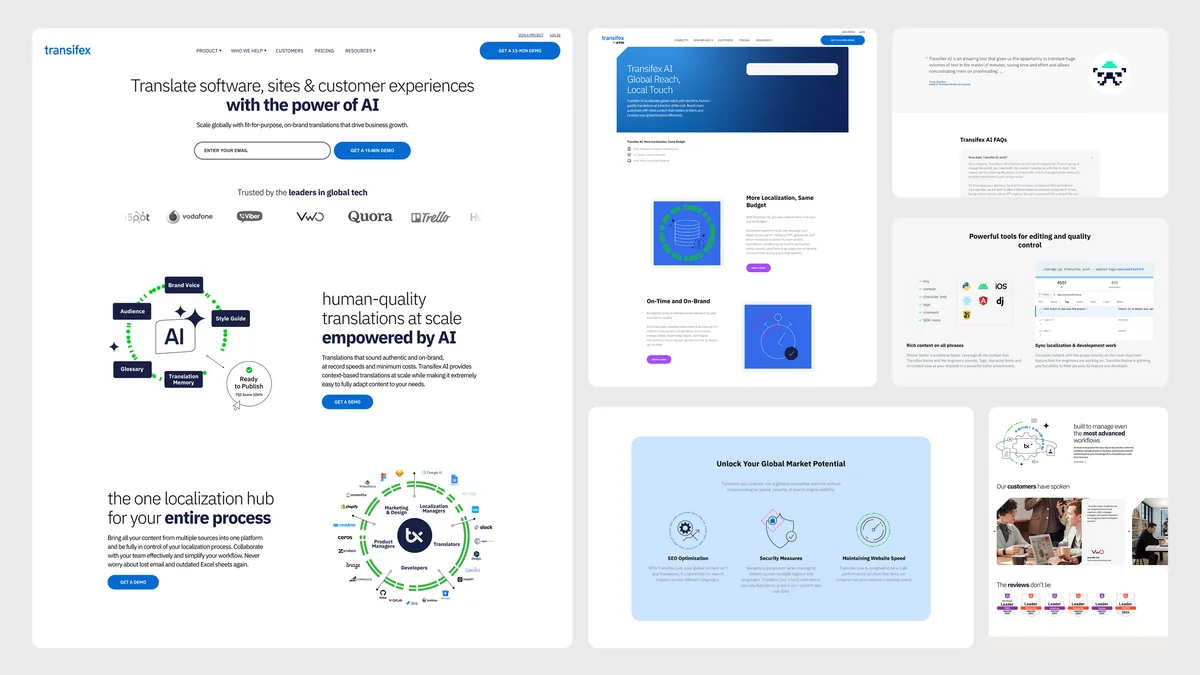
Then a new CEO came in during 2024 and read the moment correctly: AI was going to rewrite localization, and a translation tool that ignored that was a dead tool walking. He pushed the team to build two things. The first was an AI translation engine that pulled context in real time, customer glossaries, company glossaries, golden translations, so the model worked from the customer’s actual language rather than a generic one, then ran the output past three different LLMs to converge on the closest match to the source. The second was a quality index, the judgment layer on top: it scored the output, decided whether it was good enough to publish without a human, and flagged what needed intervention, feeding every correction back into the system.
The insight that mattered commercially was which of the two was the differentiator. It was not the translation. Every LLM can translate. The scarce thing was the quality index, the ability to say, with a score you could trust, this piece ships untouched and that piece needs a human. My mandate was to bring the company back to growth and position it for a possible exit, and the raw material I had was an overlooked brand sitting on top of a quality-judgment engine almost nobody knew existed.
What I tried
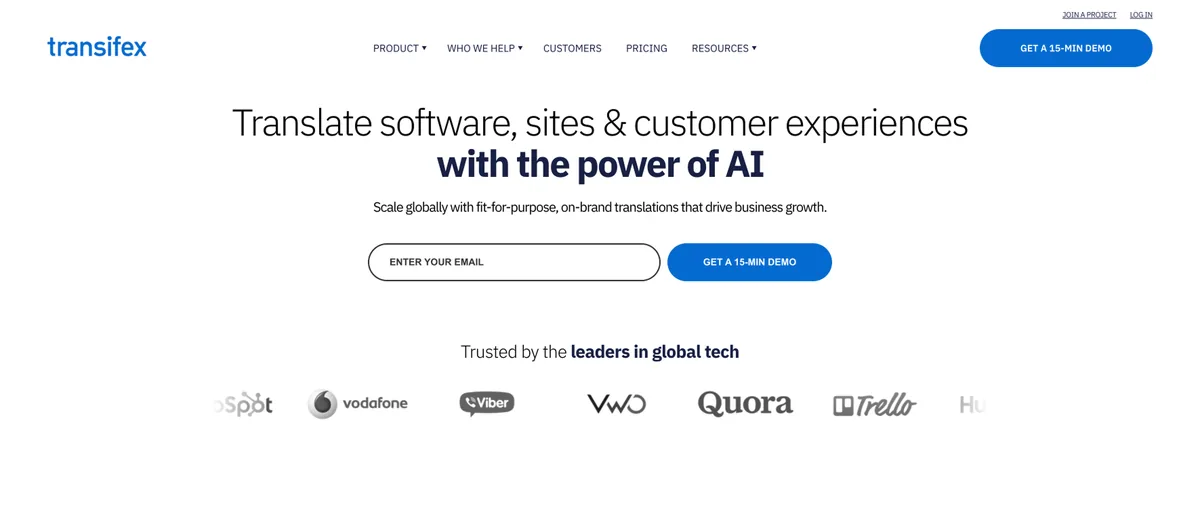
The first phase was messaging. We rebuilt the website’s story around the engine and the index, moved the differentiator to the front, and cleaned up conversion along the way. Iterative work, constrained by the old template, but it started the repositioning where it counts first: what the company says about itself when someone finally looks.
The second phase was the one with real stakes. When the launch date for the next major release was set, I pushed for a full rebrand to land with it. Not a refresh. A complete visual and verbal overhaul that positioned the company as AI-first and a front-runner in AI localization, with the product launch as the proof point landing the same moment the new identity did.
The rebrand start to finish, screenshots included, is in How to Say AI-First and Be Believed.
The hard craft problem was tone. This was 2024, the loudest year of AI hype, and every SaaS company on earth had bolted “AI-powered” onto its homepage. Claiming leadership in that environment risked sounding like exactly the vaporware we were not. The discipline we landed on: lead with the mechanism, not the adjective. We explained that the system scores its own output and tells you what a human still needs to touch, because a claim with a mechanism inside it reads as engineering, and a claim without one reads as marketing. The whole rebrand was written under that rule.
The tension I carried through all of it was the community. The platform came out of the open source world. From developers, for developers, was not a slogan, it was the actual history, and the loyalty of that base was the one asset the fallow years had not eroded. And here I was repositioning the company toward enterprise and all-in on AI, the two moves most likely to read as betrayal to exactly those people. Some of the development team were not sold on going all-in either, and I sat in the rooms where the CEO had to win them over. I braced for the backlash.
Then we sold the company before I ever saw whether it would come. The exit validated the market-facing story completely, and it permanently closed the question I most wanted answered: would the community that made the platform beloved have come with us? I wanted more time there anyway. I loved the company and the team, and I would have liked to see the launch prove itself in the market. But the honest version of the regret is narrower than sentiment: we won the argument and left the room before it finished. I still do not know if the base would have followed, and no outcome, however good, answers that. It is the one thing a fast, clean exit can never tell you.
What I would do now
The acquisition closed in January 2025, and the timing turned out to be better than we could have planned; the economic weather turned rough within months, and the same deal would have been much harder half a year later. The acquirer’s logic was the repositioning thesis stated back to us in cash: a technology-only company bought a former legacy tool specifically to build its AI capability around it. That is what changed meaning looks like on a term sheet.
What I would hand anyone walking into a similar mandate is the sequence, because the sequence is the strategy. First, find the one differentiator that is actually scarce, which is usually not the thing the product does but the judgment it encodes. Ours was not translation, it was knowing what could ship without a human. Second, rebuild the message around that differentiator before touching anything visual, so the rebrand has something true to announce. Third, land the identity change on a proof point, a launch, not on a Tuesday, because a new coat of paint with nothing underneath it is how legacy tools embarrass themselves. And through all of it, write under the mechanism rule. In a hype cycle, the companies that explain how are the ones that get believed.
The last thing I would tell them is the uncomfortable one. If the repositioning works, it may work faster than your attachment to the company can keep up with. Position a company well enough to be bought and you should be prepared to mean it. I was, mostly. The part of me that still wonders about the community is the part that was not.